How To Recover SEO Rankings? - [5 Proven Tips]

Updated: May 1
![How to recover SEO rankings - [recover SEO rankings]](https://static.wixstatic.com/media/9417b1_c5b8b32053074968ae68cf01ed55237e~mv2.jpg/v1/fill/w_640,h_423,al_c,q_80,enc_avif,quality_auto/9417b1_c5b8b32053074968ae68cf01ed55237e~mv2.jpg)
How To Recover SEO Rankings?:
Recovering SEO rankings can be a challenging task, especially if you're not sure where to start. However, there are some important steps you can take to improve your rankings and get your website back on track.
So, let's dig deeper to provide you with more information.
Recover SEO Rankings:
Here are the five important proven tips to help you recover SEO rankings:
1. Conduct a Website Audit:
Start by conducting a thorough website SEO audit to identify issues that might be hindering your SEO efforts.
This could include broken links, duplicate content, slow-loading pages, manual penalties, or other technical SEO issues that need to be addressed.
You can use Ahrefs Webmaster Tool, which is free and can assist you with website audit findings on a weekly or monthly basis, as per the schedule you set, with results automatically shared via email reports.
You can either outsource this work to an expert SEO freelancer or a reputable SEO agency to simplify the process and take necessary action.
“Auditing the content on our site will always be a best practice, and it’s a great process to go through as you can uncover a lot of hidden gems while also identifying what other content updates, optimizations, or net new creations the site could benefit from” – Search Engine Journal
Frequency of Website SEO Audits by Type of Business Website:

2. Focus on Content:
Content is king when it comes to SEO, so make sure your website has high-quality, relevant, and unique content optimized for search engines.
People-first content that aligns with Google's EEAT content aspects performs better not only in traditional organic search but also in AI search (AI SEO).
This also includes using targeted keywords, understanding search intent, creating engaging headlines, writing compelling meta descriptions, and other on-page SEO factors.
Do you know? - “Developing quality content around a very specific topic may help you attract a more committed and loyal following, who relies on you to regularly deliver the content they’re seeking” – Google for Creators
3. Build High-Quality Backlinks:
Backlinks are an important ranking factor for search engines, so make sure you're building high-quality links from niche-relevant and reputable websites and blogs.
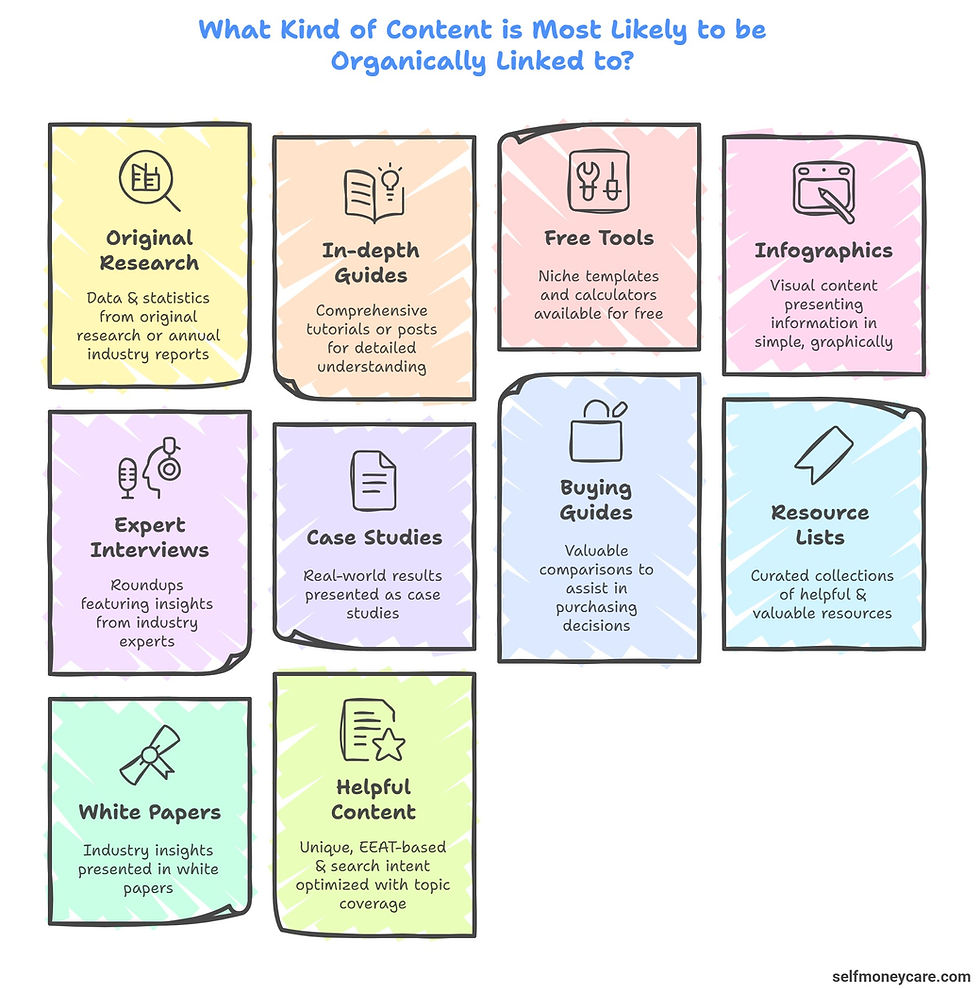
You can leverage doing quality guest posting on authoritative blogs, participating in niche communities and industry forums, publishing link-worthy content and tools, doing content distribution, or reaching out to influencers in your niche.
Content Most Likely to Be Organically Linked To:
4. Optimize Website for Mobile:
With more and more people accessing the web on their mobile devices, your website must be mobile-friendly. Make sure your site is optimized for mobile devices with a responsive design and fast-loading pages.
As per Meltwater's Digital 2025 Global Overview Report, the share of web traffic by devices is as follows: mobile phones (63.05%), laptops and desktop computers (35.06%), and tablets (1.86%).
5. Monitor SEO Progress:
Finally, keep a close eye on your SEO rankings and monitor your progress over time.
Use Google’s free tools like Google Analytics (GA4) and Google Search Console (GSC) to track your traffic and keyword rankings, and make adjustments as needed to stay on top of the latest SEO trends and best practices.
Each website owner can track, edit, improve, update existing content, or create new content using the insights from these tools that help to increase rankings in the search engine result pages (SERPs).
Remember - “By updating your content on a regular basis, you can improve your on-site experience for your users, keep competitors from encroaching on your rankings and traffic, and also optimize your site more efficiently by making the most of ranking signals that you’ve already earned” – Wix SEO Hub
Measures To Recover SEO Rankings for Those Sites Hit By Google Updates:

P.S: Websites affected by Google updates for various reasons may not guarantee recovery, as even Google does not provide a clear timeframe for improvement. Positive developments may take at least 8-12 months to materialize.
Pro-Tip: In this AI search era, where gaining website traffic is becoming increasingly difficult due to consumers' use of AI platforms and tools, including ongoing Google algorithm updates, it's highly recommended to diversify your website traffic sources for business growth and sustainability.
The most recommended strategy for this purpose is to start generating a quality email list.
In conclusion, recovering your SEO rankings takes patience, strategic action, and consistent effort. By identifying the root cause, fixing technical issues, refreshing your content, and rebuilding your backlink profile, you can regain your lost visibility.
Start implementing these strategies today, monitor your progress regularly, and remember, SEO recovery is a marathon, not a sprint.
Here's related information that you may also find helpful – Is Page Speed a Ranking Factor?
P.S: Ready to [unlock the power of digital marketing] and drive [your] business forward? – Access my forum today
P.S.S: Please don’t forget to forward this blog post to your network so they can get the best tips, practices, strategies, education, resources, and tools to help their businesses grow [sharing is caring].
Comments